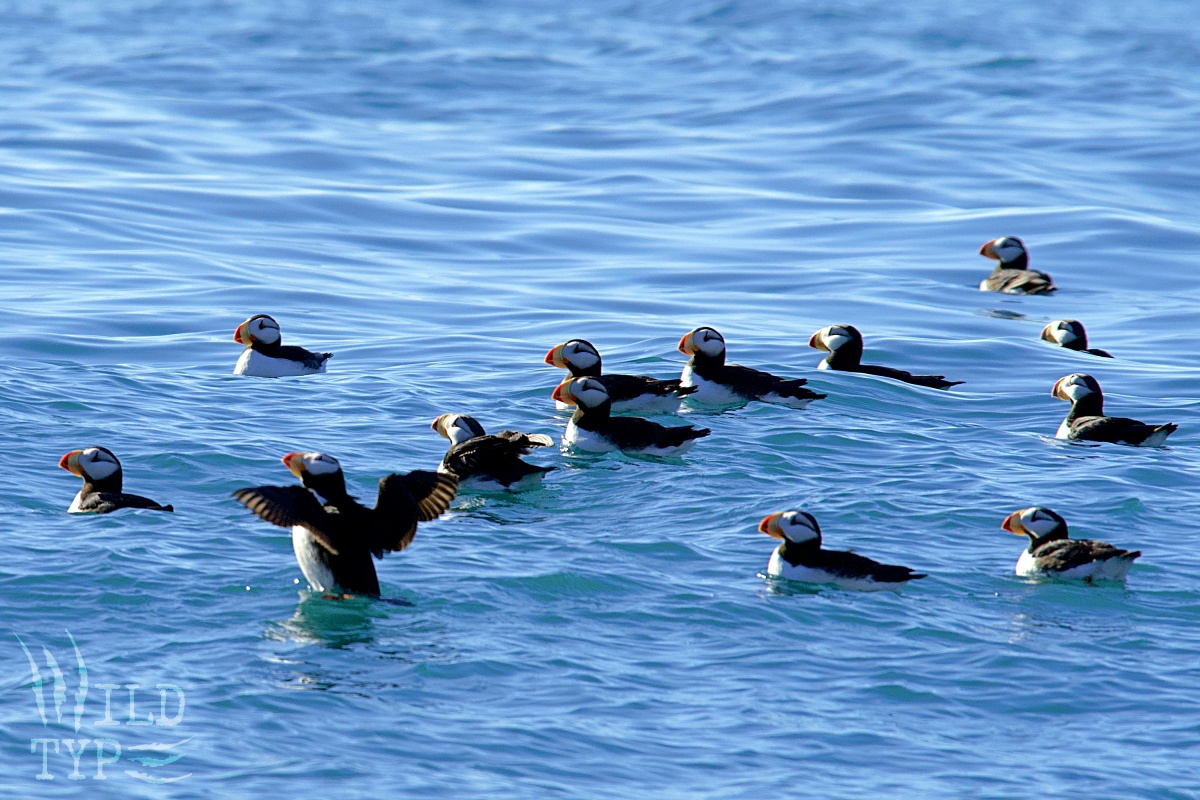
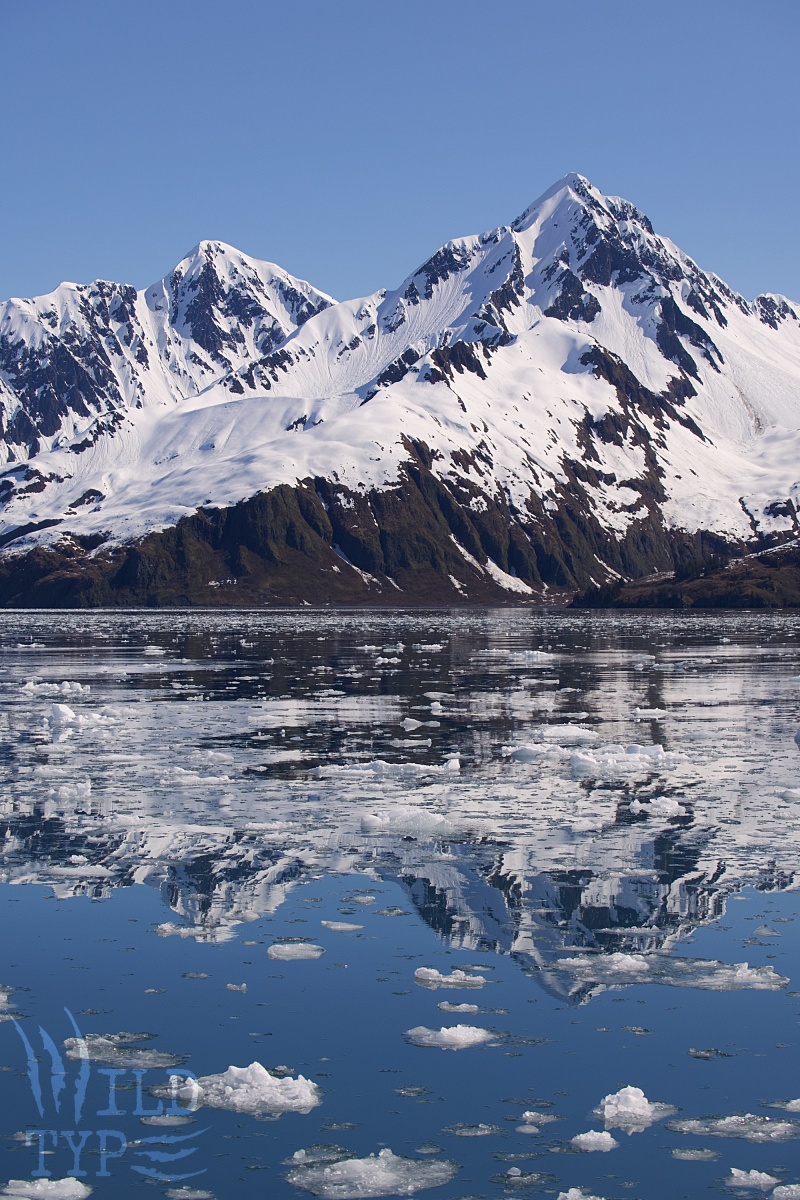
My Laddie’s mother came to visit us in May, and since she’s fond of kayaking, we took her to Seward for a paddling excursion at Aialik Glacier. I’d watched the weather forecast all week and booked just a few days ahead, choosing the lone sunny spot in the meteorological lineup, It didn’t disappoint. Mountains rose into a brilliant blue sky as a water taxi bore us around the Kenai Peninsula’s jagged coast. Our captain nimbly steered us close to wildlife along the way. Three mountain goats, one a tiny kid, trotted across a vertical cliff some 200 feet above the water. Red-faced cormorants peered down from similarly sheer nests, and rafts of horned puffins bobbed on the waves.
It heartened me to see new wildlife generations, since this ecosystem has suffered a tough few decades. In 1989, the tanker vessel Exxon Valdez spilled 42 million liters of oil into Prince William Sound, devastating birds, mammals, and fish populations. Twenty-five years later, a prolonged marine heatwave disrupted species distribution. With Alaska warming more than twice as quickly as the rest of the U.S., the dangers are not over. But on this dazzling day, Alaska’s marine life reveled in spring.
Dall’s Porpoises danced in our bow wave for a few moments before we turned into Aialik Bay, and into a flotilla of ice chunks. The captain knelt on her chair for a better view, navigating slowly through the frozen minefield. Ice thunked and skittered along the hull. Each tremor resonated eerily with the history book I’d been reading about an Arctic exploration vessel frozen in polar ice. Extrapolating the impact of these small growlers to an ocean scale made me shiver.
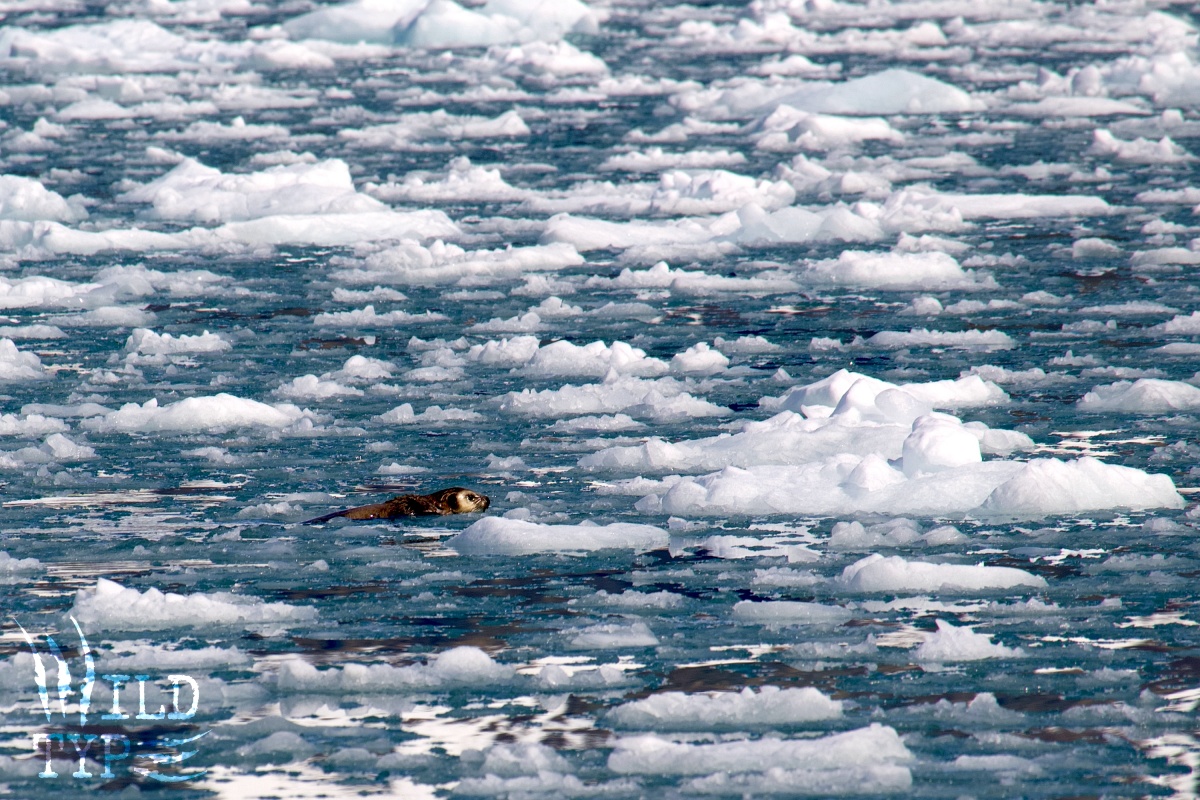
I got an even closer appreciation once we launched the kayaks from a rocky beach. Threading the icy maze, our plastic boat transmitted a physical sense of how solid the chunks were, often much more substantial than they appeared on the surface. Melting crystals crackled like rice cereal. Curious heads popped up to study us: harbor seals, who use the remote bay as a nursery. Pupping usually begins in May, and several floes already supported small furry passengers. Despite my mother-in-law’s commendable steering, we couldn’t maneuver with the seals’ agility. Dodging ice, we hardly looked up at Aialik until we rounded an outcrop into clearer water.
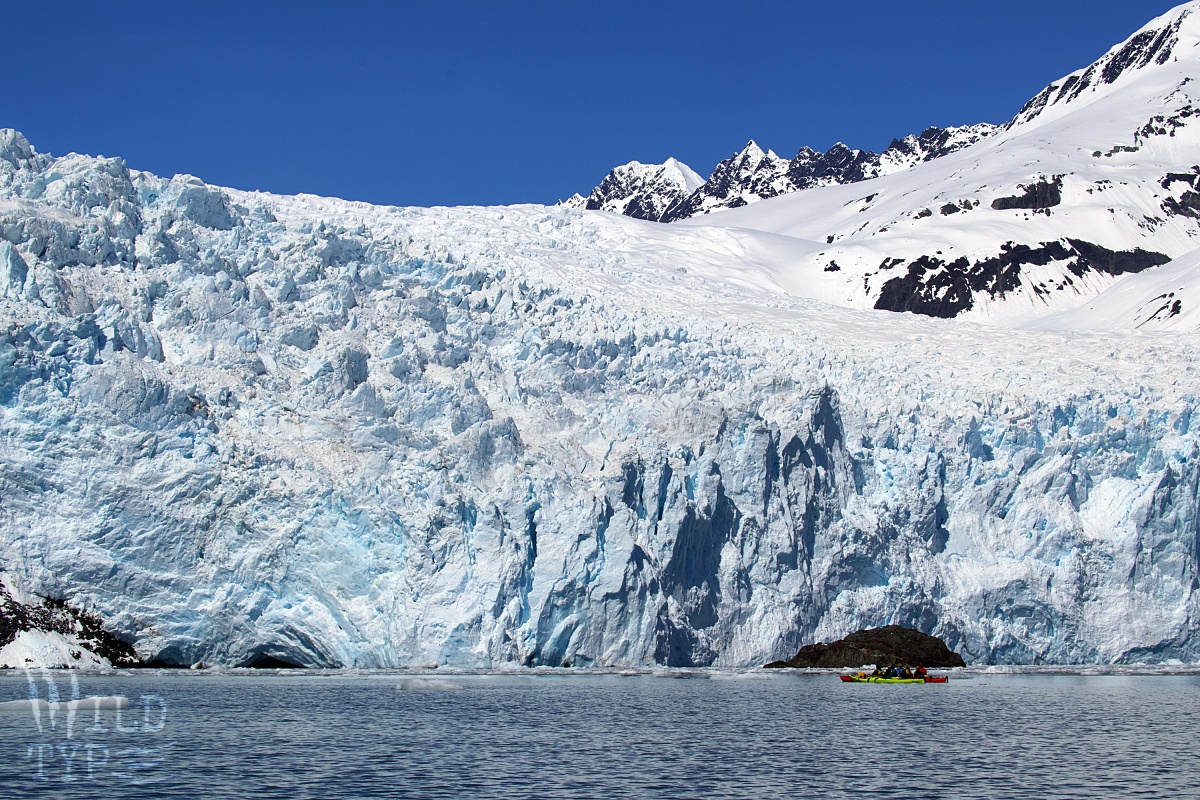
From the beach, the glacier had seemed small. Now its imposing wall rose before us, and our guide said it was still a half-mile away. But that was close enough to hear it. Aialik spoke with a voice like the earth itself, rumbling like distant thunder. Every so often a sharp report cracked across the bay as a small piece of ice calved into the water with a terrific splash. Vibrations rippled into my bones, reminiscent of fireworks, only far more thrilling. This was no mere pyrotechnics, but the raw forces of geology winding me into their ancient process. Even the obnoxious flight-seeing helicopter that darted across the glacier’s face could not diminish its grandeur. If anything, it only lent perspective: our gravity-snubbing technology was just a red gnat against this frozen bulwark.
In an era where climate change wreaks havoc on polar ecosystems, calving often appears as an act of destruction. But our guide, a philosophical young man, reminded us that it is also an act of creation. Ice from glacier fields replenishes the minerals that nourish marine life. He asked our small group whether we’d experienced a calving in our lives, some dramatic break from what came before. No one responded. I’m not much for group therapy, but I know how dull it can be to lead a non-participating group, so I threw him a bone: “I grew up on the East Coast and never lived more than two hours’ drive from my close-knit family, until I took a job in Australia and separated from the only life patterns I’d ever known.”
His next question struck open a latent stone in my mind like a geode, revealing unexamined realities within: “When a glacier calves, you can’t just glue that ice back on—did you find that you couldn’t go back to the way things were?”
“Yes—that’s why I chose Alaska as my next home. I couldn’t go back to that urban east-coast life.” Bobbing in Aialik’s majestic chill, I glimpsed the tectonic shifts in my own (comparatively insignificant) existence. Glacial calving is the perfect metaphor for the past five years. A pandemic, antipodean adventures, and re-connection with nature reshaped me as deeply as ice carves earth. Although the experiences have challenged me, they have also enriched my life beyond measure.
 Wild Type