Only one thing scared me about moving to Alaska six months ago.
Not the remoteness. Australia got me hooked on wild environments with more nature than civilization, so this was actually a selling point.
Not the wildlife. While moose and bears can be aggressive, photography has taught me to keep a respectful distance (and a can of bear spray handy).
Not even the cost of living. Grocery prices in Anchorage still make my jaw drop—$3 for a can of beans?!—but after surviving in expensive East Coast metropolises as a cash-strapped new college grad, I’m a goddess of frugality.
No, what worried me was winter. I often joke that I’m solar-powered. My love for the outdoors (and my camera’s sensor) demands daylight. Anchorage only sees the sun for 5.5 hours on the winter solstice; compare that to about 9 in Chicago, and 10.5 in Miami. Although I looked forward to snow after years in summery Oz, the thought of a long, dark Arctic winter sent premature chills across my skin.
What a shock to fall in love with it.
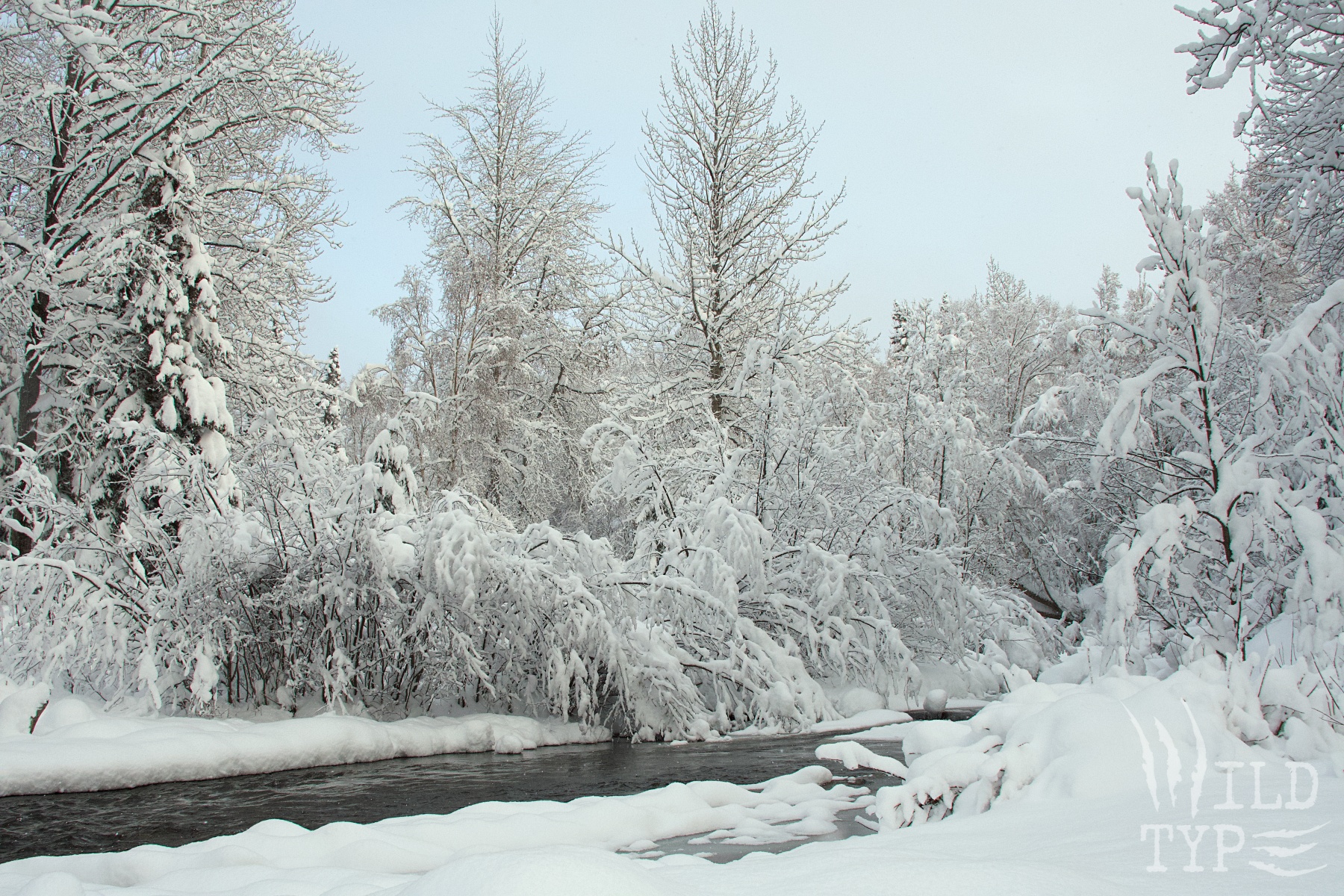
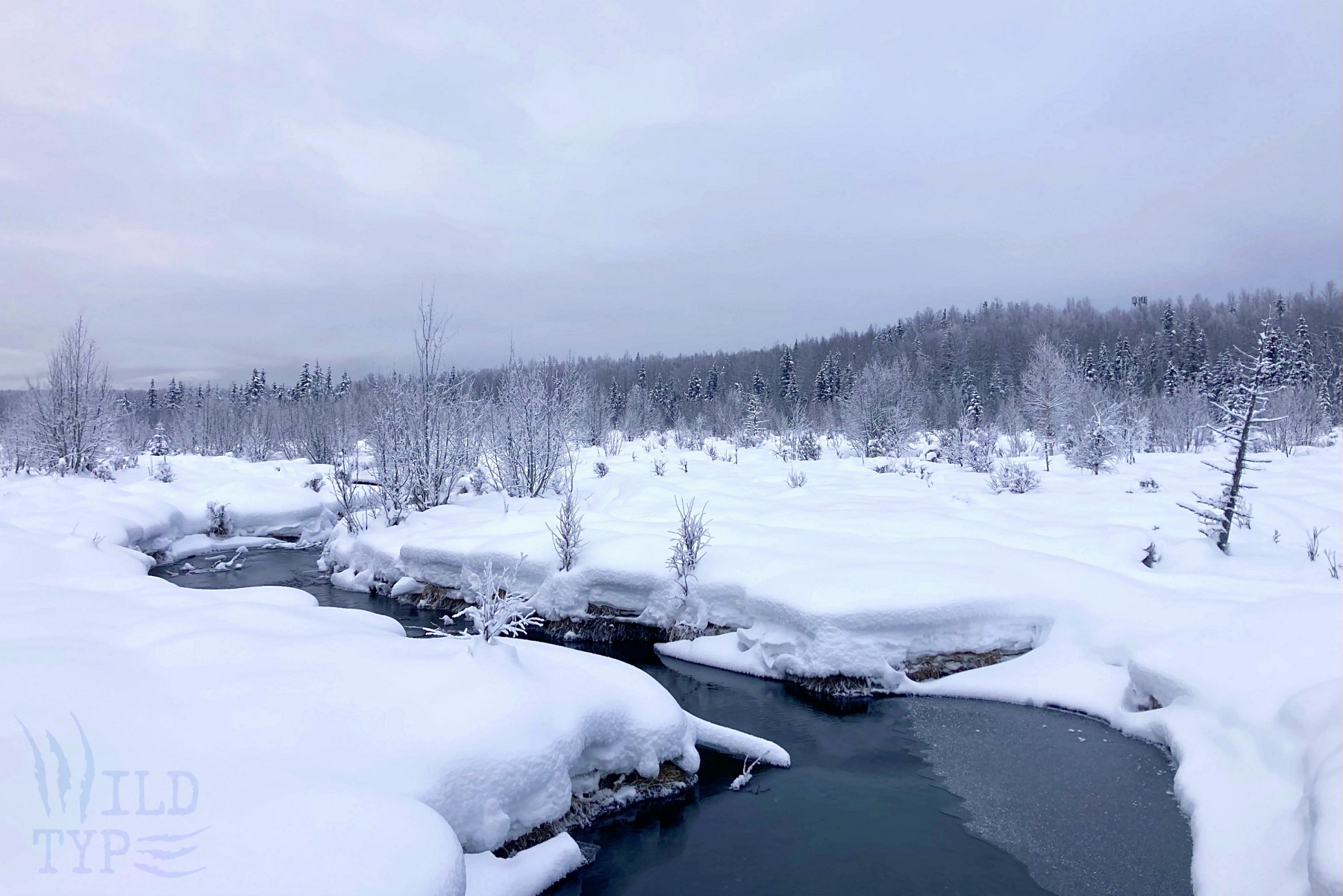
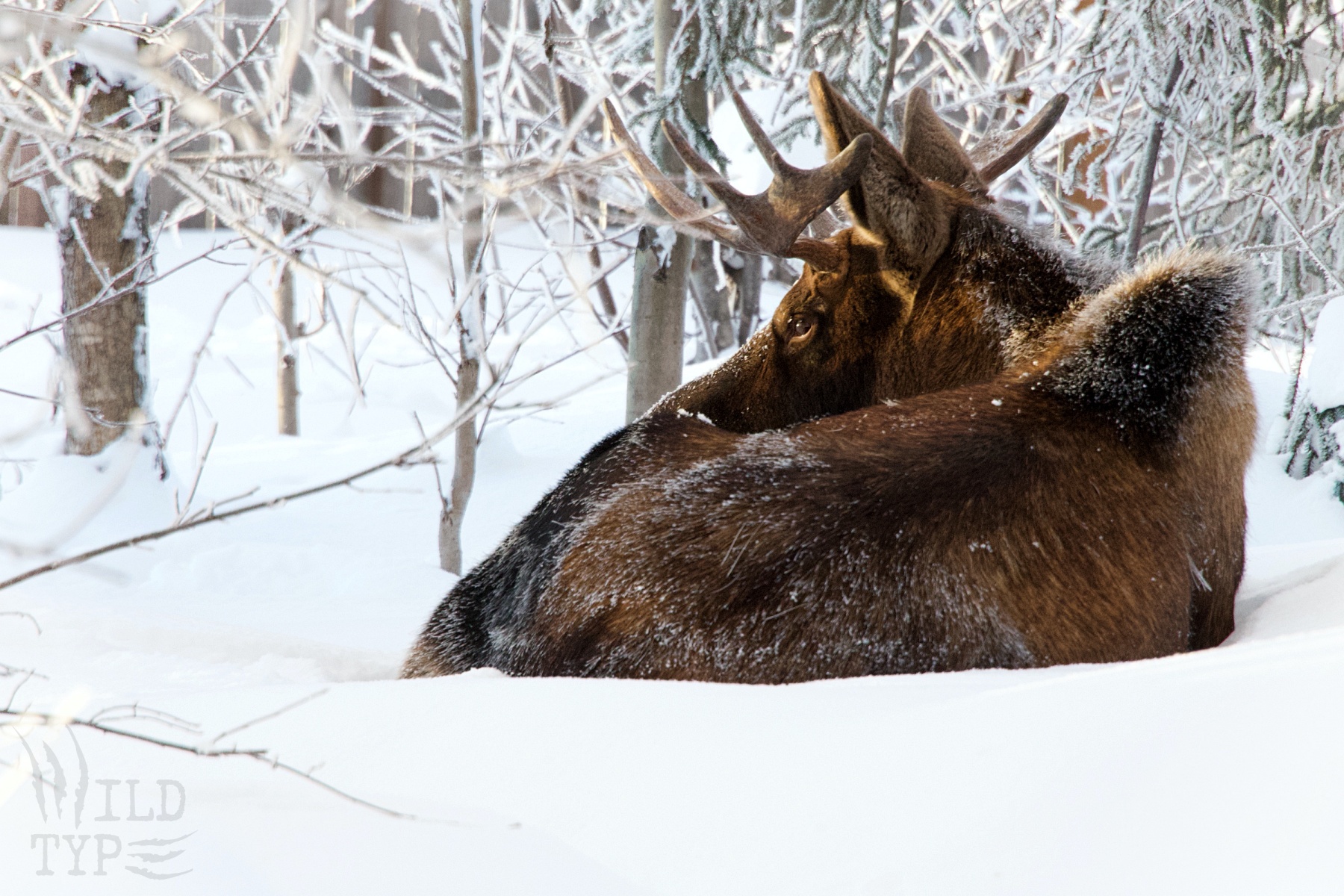
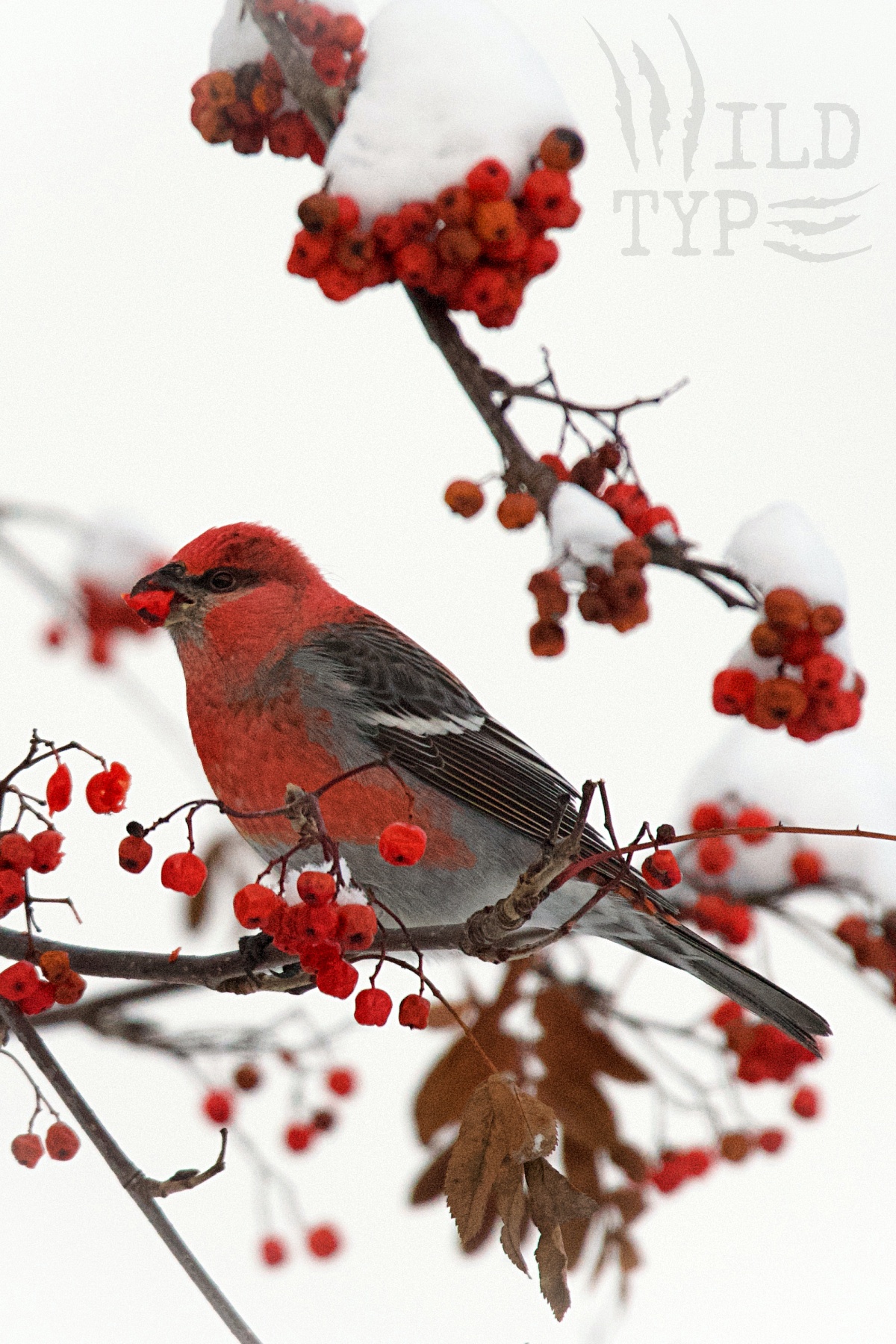
Nearly 75 inches of snow fell on Anchorage between October and December, just shy of the annual average of 77 inches, making it the snowiest 45-day period on record. The weather casts familiar landscapes under a crystalline spell. Marshes become blank pages for a stream’s Stygian calligraphy. Foggy dawns coat the trees in ice, turning forests into exquisite glass labyrinths. In the lavender twilight after work, I snowshoe in the local woods and follow moose tracks through the spruce. If I halt my footsteps, I can hear snowflakes falling on my jacket. Birds gleam like jewels against the white backdrop. Vibrant pink crossbills forage the last berries while ravens bathe in the drifts, whipping up powder with their obsidian wings. Cold sears my fingers. Ice coats my eyelashes (the first mascara I’ve worn since my college theatre days). Yet the frigid air invigorates me. I walk the hoary trails ablaze with wonder.
At first I feared the length of Arctic winter. Now, new climate change data leaves me terrified they might melt away for good.
The Arctic is warming more rapidly than any other place on the planet. Different studies cite different rates, ranging between two to four times the global average, but all agree it’s too darn hot. The National Oceanic and Atmospheric Administration’s 2023 Arctic Report Card documented the warmest summer surface air temperatures on record and further diminished sea ice. Without that ice reflecting sunlight back into space, oceans absorb more heat and release more moisture into the atmosphere, generating more precipitation.
But it may not fall as flakes. Seven billion tons of rain deluged Greenland across three days in 2021, the most since record-keeping began in 1950. It even rained on the country’s highest peak, which had only documented snow. New climate models predict rain will replace snow as the Arctic’s most common precipitation in many areas within the next 50 years. This could exacerbate Arctic ice decline. Comparatively warm rain can melt snow and reveal darker layers beneath, triggering the aforementioned feedback loop of heating and melting known as the albedo effect.
What’s the Arctic without ice? We might find out soon. A 2020 study predicted that Arctic sea ice could vanish entirely by 2035; an ice-free sea route across the pole would reduce transit time between Europe and Asia by at least ten days. That invites a lot more traffic through a fragile ecosystem, and may spark territorial conflict between claimant nations. Beneath the waves, the seabed may contains deposits of minerals and oil. Subsea permafrost currently traps copious amounts of methane hydrate, a molecular structure in which ice crystals trap natural gas. If the permafrost thaws, the ice melts and the greenhouse gases escape to exacerbate global warming. Ironic that our abuse of fossil fuels is unlocking even more of them, tempting us to accelerate our own planetary demise.
Having experienced the harsh magic of an Arctic winter, I struggle to imagine a world without it. But I tried in the flash fiction piece below.
Flash Fiction Forecast
Ice Burn
“Boss, we’ve got a whale.”
	“Excellent!” You sip your coffee—thanks to this lucrative operation, you can drink the hard-to-grow stuff, not that synthetic swill served in the cafeteria—and energy rushes through your blood. “That’ll show the environmental inspector we’re not disrupting the precious ecosystem.”
	“A dead whale.”
	The glow fades. “Why the hell didn’t you start with that?”
	Your assistant shrugs. “It’s implied. That’s usually the only kind we spot nowadays.”
	“Well, clean it up!”
	“It’s close to the machinery. I need your authorization to shut off the drill so we can deal with the carcass.”
	You sigh. When the well doesn’t pump out, your bank account does. “Fine, but make it fast. I want the rig in perfect order when the inspector arrives.”
	“She’s already here.”
	“What?!” You jump up from your desk. Conflict cappuccino splatters across the keyboard.
	“The boat was pulling into the jetty as I came over here.”
	“Why the hell didn’t you start with that?” Yanking your laptop away from the spill, you shove it into your assistant’s arms. “You take care of this. I’ll take care of her.”
	You grab an umbrella and dash out of your office. Drizzle turns the Arctic Ocean as grey as the drill platform underfoot. Anxiety and the rattling industrial elevator grind your teeth all the way down the truss to water level, where the jetty pokes its tongue at the north pole. Wet planks squeal under your shoes as you approach the boat. Why couldn’t she take a helicopter like a normal person?
	You take a deep breath of rank fuel-flavored air and muster your most authentic smile.
“Welcome aboard! I hope you had a smooth trip.”
	“Shouldn’t have,” the inspector grunts. She’s old enough to be your mother, but marches down the gangway with vigor. “Fifty years ago, I’d have needed an icebreaker to reach this spot.”
	“And all those cargo vessels would’ve had to go the long way around.” You gesture toward the horizon; somewhere beyond the mist, electric European cars and Asian consumer electronics zip through new shipping lanes at the top of the world. “An ice-free Arctic is much safer for navigation.”
	“Not if you’re a whale, trying to communicate through all that engine noise.” Her snowy eyebrow cocks.
	The wily old witch must’ve circled the platform and assessed the whole structure before she docked! Damn—the inspection hasn’t even started, and you’ve already lost points on ecosystem impact. Maybe charm can compensate. After quickly calculating the cost of your bespoke suit against the value of maintaining the rig’s certifications, you offer the inspector your umbrella.
	She waves it away and pulls up the hood of her squall jacket. “Marine methane hydrate, eh?” she asks, squinting up at the derrick.
	“I prefer fire-ice. Much catchier.”
	“Literally. I just visited one of your competitor’s rigs. Or what’s left of it. It’s been weeks since the explosion, but you can still smell the smoke.”
	“Yes, that was unfortunate.” Not for your bottom line—the sudden drop in supply skyrocketed natural gas prices—but the subsequent mandate for safety reviews was a nuisance. “But there’s little risk of an incident here. As you’ll see, I run a fully compliant operation.”
	You usher the inspector into the control room. Blue computer light gives it the feel of an aquarium, with colorful data darting across the glass instead of fish.
	The inspector presses her nose to a screen. “Why has your flow rate stopped?”
	“We shut off the pump to clear an, er, obstruction.” Spotting your assistant hunched over a terminal, you pull him aside and drop your voice. “Are we ready to start again?”
	“Not quite, boss. The whale was caught in some fishing gear, and now all that plastic netting has gunked up our mechanisms. We’ll need an ROV to cut it free, then a full diagnostic panel to make sure everything—.”
	“Forget that!” A mechanical issue in the inspector’s presence could trigger an avalanche of audits, assessments, and costly delays. Gas prices could drop in the meantime. “We’ll just drill through the debris.”
	“Are you sure? If there’s too much agitation in the seabed…”
	“…We might crack the next layer of permafrost and tap a whole new reserve. Full steam ahead.” You steer him into an operator’s seat, then try to divert the inspector with an animation of the rig’s function. “Our proprietary process melts the permafrost in situ, separating the gas and ejecting harmless water vapor…”
	Tremors shake the platform.
	The white eyebrow arches again. “That didn’t feel harmless.”
	You lunge for the control panel, where your assistant presses buttons. “One of the pistons is stuck,” he explains, indicating a yellow patch on the schematic.
	“Then crank it up. Show our guest that this rig can withstand anything nature throws at it.” When he hesitates, you lean across and adjust the energy levels yourself. Max power. Max profit. A shudder runs through the rig, then the quiet churn of extraction resumes. Gas flow indicators burn dollar-green. “See? Just need to show this biome who’s—.”
	The floor lurches.
	Catching yourself on the console, you click frantically around the interface.“What’s going on? There aren’t any malfunctions.”
	“It’s not the structure—it’s the seabed.” Wizened fingers clasp your arm as the inspector studies the readouts. “This is what happened to that other platform. Releasing too much methane hydrate can destabilize the seabed and cause a submarine landslide.
	Metal groans, and the room tips further. Gauges flare red, turning the aquarium bloody. 	Alarms blare through the announcement system.
	“Evacuate!” your assistant shouts, bolting for the exit. Outside, the world seems to have tilted on its axis. The platform quakes as its foundation crumbles. While everyone scrambles for the emergency boats, you climb for the helipad. It lists slightly over the water, but the aircraft hasn’t budged. The ladder slips under your sweaty palms. Just a few more yards and you’ll be skyborne.
	Bolts scream. The helipad topples. You hang suspended for a dreadful heartbeat. Then gravity yanks you down toward the ocean’s cold maw. This is definitely going to ruin your suit.
Ice Burn is my first deliberate attempt at forecast fiction here on Wild Type, so please let me know what you think in the comments!
 Wild Type
Nice story, and proceeding article, but the links are almost indistinguishable from the background.
LikeLike
Thanks for flagging that. I’ll review the style settings and try to improve visibility.
LikeLike
I hope that stories like this that dramatize a future likely to become reality because of our inability to acknowledge our need to rethink our approach to living on this planet will be nudge in the right direction. We aren’t facing a technical problem we are facing political and cultural blindness. We lie to ourselves with advanced quackery like sustainable aviation fuel (SAF) made of sugar and fats. The theory is good but the reality is that there isn’t enough arible land to grow enough sugar cane to meet current fuel usage rates. And growing enough food to feed the future population of earth might just be more important that SAF. Great story!
LikeLiked by 1 person