I leaned over the stewpot and laughed into the fragrant steam. “When did we start eating like peasants?” It wasn’t a complaint, but a cheeky observation on our evolving household diet. Five years ago I rarely made soup unless someone was ill, and then it came from a can. Now the remains of a rotisserie chicken simmered with vegetables and herbs for a weekend dinner. Under our new food philosophy, even poultry carcasses are wrung of nutritional value.
“We’re living in bad times, aren’t we?” asked my Laddie, in that wry monotone that makes it hard to tell if he’s joking. It does seem like the offhand references in my cli-fi stories about certain foods becoming costly or rare have leapt from the page and into my grocery cart. Even though global food prices trended downward in 2023, domestic food price inflation remains high. According to the World Food Programme, the number of people facing food insecurity increased from 135 million in 53 countries pre-pandemic to 345 million in 79 countries in 2023.
Trying to feed hungry hominids takes a toll on Earth. Food systems generate a third of global greenhouse gas emissions, creating a vicious feedback loop as extreme weather from climate change damages harvests. Agriculture drives biodiversity decline through land use and monoculture. It’s also responsible for 70% of freshwater drawdown. The way we make food is not only unhealthy for the planet, but for us: obesity, malnutrition, and diet-related diseases burden medical systems around the world. Is there a better recipe for food production?
Feast your eyes on a new report from the Food System Economics Commission (FSEC). The study found that shifting to a more sustainable global food system could create up to $10 trillion in benefits every year, while improving human health and the climate crisis. Taxing unsustainable foods and subsidizing production of healthy ones would gradually convert farms to carbon sinks. This would help keep global warming below 1.5C degrees, take better care of the land, and support incomes for an estimated 400 million farm workers. New technologies such as in-field sensors would improve efficiency. Resultant harvests would be make wholesome food more accessible to more people, sparing 174 million premature deaths from diet-related diseases.
Implementing this “Food System Transformation” would cost a projected $500 billion a year through 2050. That sounds like a lot of money until you put it in context. The World Bank estimates the value of the global food system at roughly $8 trillion, or 10 percent of the $80 trillion global economy. (For those far removed from elementary school math, a trillion equals one thousand billion.) But the problems this system creates cost an estimated $6 trillion every year. For a fraction of what we currently pay to maintain a broken system, we could cultivate a resilient new one.
The revolution can start in your kitchen. The FSEC study suggests we could achieve around 75% of these benefits just by global adoption of plant-forward diets. Meat production puts tremendous strain on the planet. Brazil’s beef industry boasts a bigger carbon footprint than the country of Japan. Swapping out some animals for plants on your plate is one of the best things you can do for your homeworld, and your health: heavy meat consumption, especially red meat, is linked to myriad health problems from heart disease to diabetes. Ingredients and their sources also influence a food’s sustainability. For example, I avoid products with palm oil, a notorious driver of deforestation. Your consumer dollar is a powerful agent for change
Many environmental problems feel maddeningly beyond the influence of everyday people, but you can control how you eat. Making more sustainable choices is an easy way to help preserve the future’s fields. This month’s forecast fiction envisions how a transformed food system could transform lives.
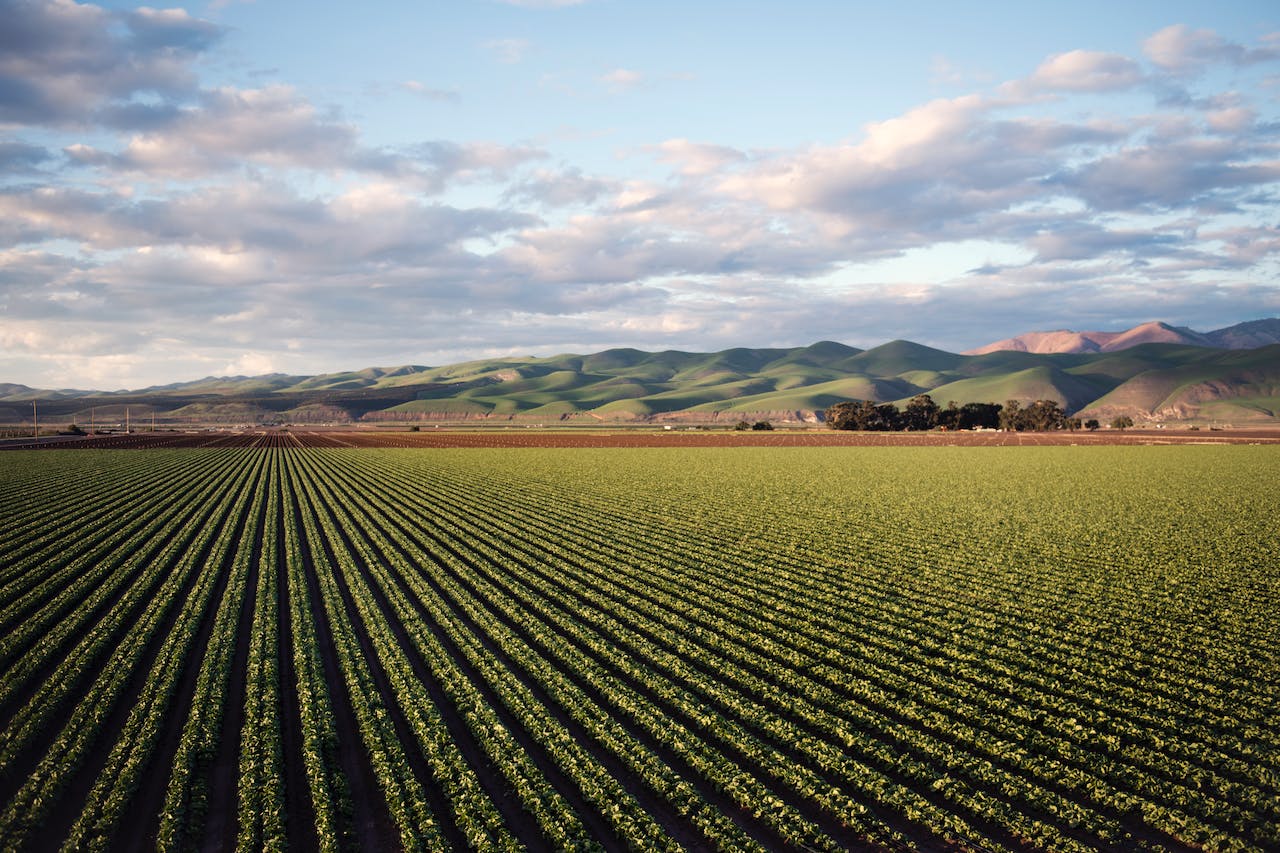
**While researching this story, I discovered that agricultural experts favor the single-word term “sweetpotato” to distinguish the orange-fleshed root from varieties of white tuberous potatoes. I therefore used that version here for authenticity.
Flash Fiction Forecast
A Fertile Future
“Are you sure you can spare this many?” asks the shopkeeper, peering into your truck.

“And more. I already took a few truckloads to the distribution center, and there’ll be another plot ready for harvest soon.”

“Wow. The new smart-farm tech is incredible.” She reaches into the nearest crate of sweetpotatoes. Lifting one of the copper-skinned roots requires both hands. “What’s it doing differently?”

“Heck if I know. All those datapoints make my head spin. It’s not like the apps I grew up with,” you grumble.

“It’s not the food system you grew up with, either,” the shopkeeper teases.
“Thank goodness. If it were, I doubt I’d have lived this long.” Arthritis twinges in your knuckles as you hoist one of the potato crates, but your heart pumps strong in your chest, and your bones can still carry the weight without strain. “Where do you want these?”

“In my belly! But the sales floor first.” Summoning helpers to unload the rest, the shopkeeper leads you into the grocery store. Conditioned air cools the sweat on your neck. You place the crate in the Local section, among a colorful cornucopia. Apricots, avocados, berries, carrots…the Central Valley’s bounty overflows like gems from a treasure chest.

A chest we only unlocked when we stopped pillaging the land, you think, hefting a bell pepper. It gleams with sweet promise. “If you want pay me for the taters in credit, I’ll shop while you’re unloading.”

You unfold your phone and pull up the PlateWatchers app. The government-sponsored program subsidizes participants’ food if they stay within a monthly point allowance, and you’re on a streak with bonuses for keepinh below threshold. Ping. You scan the tiny pepper’s code sticker. Not that you need to——you’ve memorized the point values for your usual purchases, derived from their environmental impact——but there’s a flush of satisfaction when the wholesome local produce pops up with a low number. A basket of fruits and vegetables leaves enough points to splurge on some goat cheese. Envisioning a magisterial sandwich, you grab a loaf of crusty bread from the bakery counter.

You greet the butcher as you pass the small case of meats. “Got that fall-run salmon yet?”

“Still a little early. How about some free-range goat loin? It’ll be great on the grill!”

“So will this.” You show off a shiny eggplant. “I’m saving points for fish season.”

At the checkout, you scan your PlateWatchers account and watch the numbers roll with the conveyor belt. “When I was your age, I never would have believed a program like this could exist,” you tell the teenaged cashier.

“Why? Buy planet-friendly food, save money. It makes so much sense.”

“Not cents with a ‘c’, and a lot of big agrobiz profited off the old system. Their lobbies raised hell about the government raiding our fridges. But those fridges were already half-empty, so most people were willing to try something new.”

“Well, it worked!” The cashier hands over your bulging canvas bag. It rides shotgun on your drive back to the farm, and fresh bread’s aroma makes your stomach growl. To quiet it, you munch on some walnuts. Bright California sun splinters in your mouth, each nut ripe with flavor from the orchards scrolling past the window. Verdant rows stretch to the base of the hills. Hard to believe that fifty years ago, this bountiful cradle had almost become a dust bowl.

Bowl. Dang it, now you’re thinking about lunch again.

At last the truck rattles up to your farmhouse. You go straight for the kitchen and start chopping. Red onions, shredded carrot, frothy green clouds of arugula—ooh, there’s still some poblano sauce in the fridge! Golden crust flakes from the bread as you cut two generous slices. All this sandwich needs is a fresh tomato. You open the back door, heading for your garden, and freeze on the porch. “Hey! What are you doing?”

The girl tumbles out of the compost bin, hair wild around her face. “I—I’m sorry. I was just looking for something to eat.”

“You won’t find it in there. That’s the stuff I won’t even feed my chickens. Only good for fertilizer.” You study the girl, who looks even younger than the grocery cashier. Worn clothes hang on her limbs. She’s plump, but with the droopy look of someone who’s lost a lot of weight in a short time. “Where are you from?”

Dark eyes flick toward the eastern hills. “Texas.”

Another refugee from a red-meat state. Annoyance seethes in your gut. Those reactionary holdouts suck up a lot of taxpayer dollars for healthcare and food assistance. But it wasn’t the kid’s fault she’d been born in a broken system. You can’t blame her for wanting a better life. Sighing, you point at her mucky fingers. “Come inside and wash those. I’ll make you a decent meal.”

The girl devours a massive sandwich, an apple, and a pile of homemade sweet potato chips. “I never knew vegetables could taste like this,” she says to the crumbs.

How could she, with her state’s arable land devoted to feeding and breeding four-legged methane emitters? The poor kid was probably suckling corn syrup from her first bottle. “This one’ll really blow your mind.” You set a cup of chocolate avocado pudding in front of her.

Interest widens her eyes, but she pauses to consult a blood-sugar app on her phone. “Okay.” She digs into dessert.

“You diabetic?”

“Since I was ten.” Rolling up her sleeve, she reveals the slight bump of an implanted glucose monitor. “My mom had it, too. It killed her this spring.” Tears well under her lashes, but she blinks them away. “I wasn’t going to let it happen to me, too. I stuck around a few weeks to finish school, then bailed.”

“It took you three months to drive thirteen hundred miles?”

“I walked.” She drains her water glass and dabs condensation-damp fingers across her cheeks. “Medical bills ate all our money. Had to sell Mom’s car, and fuel vouchers for travel are crazy expensive. I thought I might earn a few bucks doing farm work—I hear they don’t ask too many questions about seasonal laborers.”

“It’s different since the transition. Better.” You refill her glass. “I get subsidies for growing healthy food in healthy ways, and paying my crew living wages.”

“This is your farm?” Twisting in her chair, the girl stares out the picture window. Beyond the yard fence, acres of sweetpotato greens stretch toward the horizon. “I thought big agrobiz owned everything!”

“They almost did. This farm had been in my family for a century, but when I inherited it the 2030s, it was practically a desert.” You fill the pitcher at the sink, marveling as always at the ready flow of water. At this girl’s age, you were waiting in line for water rations because sloppy irrigation had all but drained the aquifers. “I was going to auction it off for a pittance and give up on growing anything ever again.”

“What changed?”

“The whole dang food system.”

“Taxes on meat and cheese,” she mutters with the cadence of catechism.

“That’s probably the only part they talk about where you’re from, but the revenue helped small farmers like me turn things around. I got a grant to rewild some of my land, and to set up sustainable practices on the rest.” As if summoned, your phone buzzes in your pocket. “Like this blasted new smart-farm system.”

Curiosity overcomes shyness, and the girl peers around your arm at the data dashboard. “Some of the ranches used them to track the health of cattle.”

“This one does the same for plants. I can send water and fertilizer exactly where it’s needed…when I can figure out the charts.” You turn the screen to different angles, but the readouts remain inscrutable. “The apps I grew up with weren’t this complicated!”

“I can show you.” With a deft finger, the girl manipulates the interface. Together you adjust the irrigation drip to one field, activate pheromone lures that will attract ladybugs to eat the leafhoppers infesting another, and confirm that the next round is ready for harvest.

“Thanks,” you tell the girl gruffly.

She smiles for the first time. “It’s the least I can do to thank you for lunch.”

“I’ll make you lunch every day if you keep doing that. Still interested in a farm job? I’ll need another hand for that harvest, and it would be nice to have tech support.”

Hope radiates through the dirt on her face. “I’d like that. If I learn enough, maybe someday I can go back and convince other people to try doing things this way.”

She asks how the monitors work, so you take her outside to walk the rows. Rich soil crumbles underfoot. You might struggle a bit with this newfangled farming, you think, watching the girl stroke a sweetpotato leaf, but you still know how to help a seedling grow.
 Wild Type
I think just keeping meat production local would help a lot. Mountain pastures with herds or cows are part of Europe’s mountaineous areas for centuries and I don’t think they’ve been a major strain. Transporting meat between continents when there are local sources is a problem, though.
My country struggles with deer and wild boar overpopulation which cause problems with reforestation (as the spruce monoculture forests are vulnerable to the combination of droughts, pollution, harsher storms, and bark beetle infestations). These wild animals are leaner and thus have much better nutritional value, yet few people eat them as few know how to prepare them. Yet, consuming those (who need to be hunted anyway) instead of meat imported from across the world would’ve had major ecological benefits.
LikeLiked by 1 person
Many parts of the United States have similar issues with an excess of white-tailed deer (this is what happens when we kill all the wolves and coyotes). Venison is leaner, higher in protein, and more iron-rich than beef. Yet culling programs won’t even use the meat for dog food. It’s incredibly wasteful. You’ve identified a good example of how we’ve failed to shape our food system in a practical, sustainable way. Instead, it’s all about profit.
LikeLiked by 1 person