Many human cultures have considered owls omens of death, so it’s perversely fitting that we are now arbiters of their doom. After driving one owl species toward extinction, we propose to save it by killing half a million members of another. How did we end up in this conundrum of ecological ethics?
How The Spotted Owl Lost Its Spot
The dilemma’s roots lie in trees. Northern Spotted Owls reside in the Pacific Northwest’s dense old-growth forests, but logging and development destroyed much of this habitat in the mid-20th century. The imperiled birds became the contentious mascots of the 1980s “Timber Wars” between loggers and environmentalists (industry supporters wore t-shirts with the slogan “Save a logger, eat an owl”).
Court orders in the early 1990s protected “critical habitat” for the owls, but that definition has been notoriously slippery. Wildfires exacerbated by climate change now threaten the remnants. If that weren’t enough, spotted owls face competition from a relative that recently moved into the neighborhood.
Barred Owls: Invaders or Refugees?
Barred Owls, an eastern species, expanded westward as settlers transformed once-treeless prairies. Less particular about food and nest sites than their smaller cousins, they thrived on the West Coast. Their success places further strains on Spotted Owls. Since Barred Owls are not native to the West area, and human activity likely facilitated their movement, they meet the government’s definition of an invasive species.
This designation enabled a controversial effort to save Northern Spotted Owls. The U.S. Fish and Wildlife Service (USFWS) proposes culling nearly half a million Barred Owls across California, Washington and Oregon over the next 30 years. A Barred Owl removal experiment between 2013 and 2021 reported that Spotted Owl populations stabilized in areas where Barred Owls were removed. Advocates assert that without intervention, Spotted Owls will go extinct. Critics argue that mass bird murder won’t solve the problem.
A March 2024 letter from 75 animal welfare and wildlife organizations urged the Secretary of the Interior to abandon the strategy. “We cannot victimize animals for adapting to human perturbations of the environment, perhaps especially when it comes to the all- encompassing effects of climate change,” the group wrote. “Climate change will trigger all sorts of species movements, and we cannot responsibly judge which species have strayed too much from the confines of their current range.”
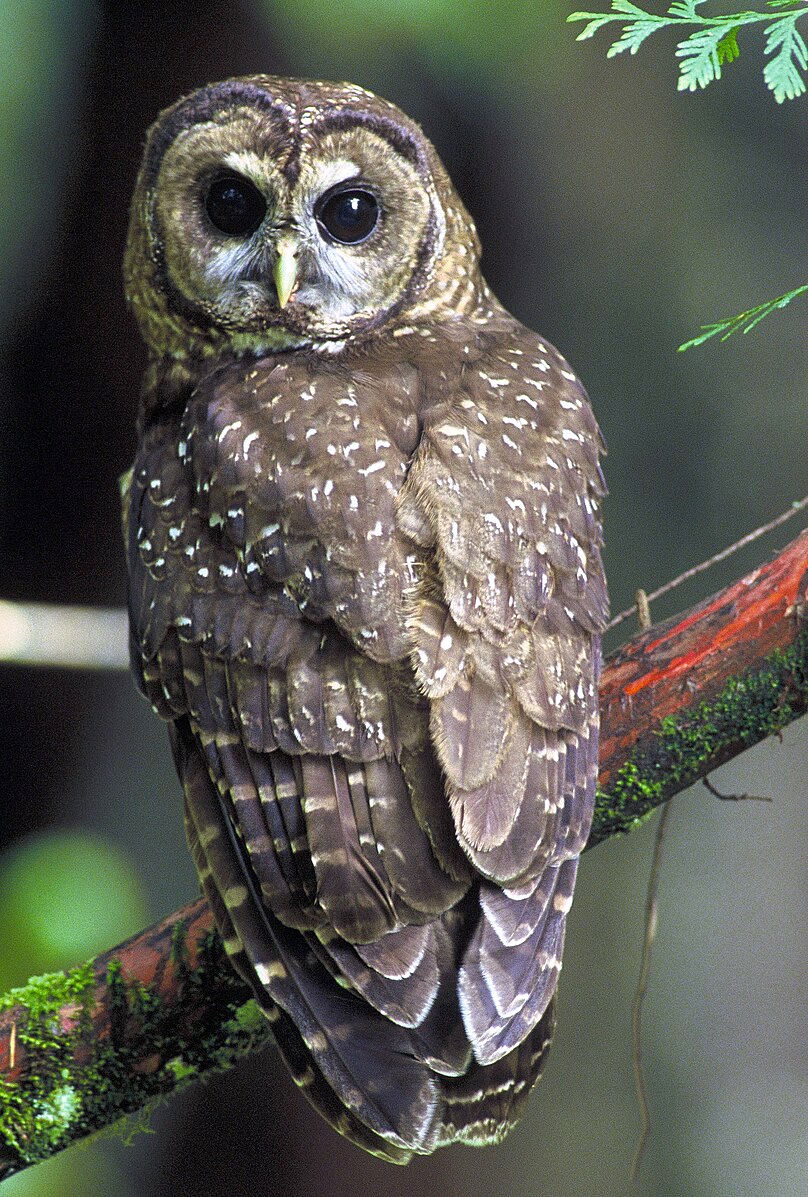

A Northern Spotted Owl (left) and a Barred Owl (right).
The Ethics of Extinction
Dilemmas like the northwestern owl debate will only become more common as the effects of climate change intensify. Take the Key Deer. This diminutive deer found only on the Florida Keys is losing habitat to sea level rise and human encroachment. Relocation to the mainland would allow them to interbreed with white-tailed deer, erasing their unique genetics within a few generations (no one ever suggests relocating the humans in these scenarios). The alternatives are extinction, or preservation in zoos as a novelty.
Aside from trolls who endorse a menu of owl nuggets, most people don’t want to see species disappear. But our planetary exploitation has already initiated a sixth mass extinction. The Living Planet Index found a 69% decline in wildlife populations around the world between 1970 and 2018. Nearly 600 plant species have disappeared in the past 250 years. We have reconfigured the world, and cannot selectively put pieces back the way they were.
Even if we tried, humans don’t have the best track record with ecological engineering. We accidentally brought rats to wreak havoc on defenseless islands, botched attempts at biocontrol such as cane toads in Australia, and allowed foreign insects to ravage plants around the world via global shipping. Recovery stories like the rodent eradication programs on Lord Howe Island and Redonda rely on geography for long-term control. Strict biosecurity can keep rats off an island. Keeping birds from a particular corner of a continent is another matter.
And are barred owls truly invaders? Organisms naturally migrate in response to shifting conditions, seeking the best chance of survival. Humans beset by storms, droughts, and political violence are doing the same. United Nations data estimates that climate change-related disasters have displaced 21.5 million people since 2010. An Australian think tank projects at least 1.2 billion climate refugees by 2050. What will we do when those “invasive species” arrive in our backyards and need a share of ever-dwindling resources? This month’s forecast fiction piece explores that idea.
Forecast Fiction
“Culling”
“Global warming, my ass,” the big man whines, zipping his ski jacket all the way to his neck. “It’s cold enough to freeze the balls of a brass stallion—or it would be, if we hadn’t torn down all the old war statues. No respect for heritage.”

“Preserving heritage is exactly why we’re here,” the ranger replies with a prim smile. “Natural heritage.”

“That’s what we were doing when they arrested us,” your best friend mutters in your ear, words turning to frosty wisps. The two of you huddle together, just as you had when security guards caught you monkey-wrenching equipment at a fracking site, and again when the judge sentenced you to this stupid community service.

“Trying to save the planet is community service,” you’d informed the court, cool and implacable as an iceberg. The public defender told you to stop sassing the judge before you got a criminal record.

What’s criminal is wasting a Saturday morning on this farce. You should be at basketball practice, or working on your college admissions essays, or plotting another anti-extinction demonstration. Instead, you’re in Boondocks National Park with lousy cell service and yellow leaves rustling around your ankles.

As if she can read your mind, the ranger says, “You probably wonder why you’re out in the woods, instead of cleaning up a playground or repainting a youth center.” She leads the group into the bracken and begins poking the leaf litter with a hooked stick.” Since you both claim to care about the environment, you’re going to assist in removal of an invasive species.”
“Burmese pythons?” your friend asks hopefully.

“No, unfortunately—I’d need a lot fewer of those to make my boots.” The man guffaws and shows off his scaly footwear. “We’re after Eastern indigo snakes.”

“They’re not invasive!”

The ranger sighs. “They are in this area. North Carolina isn’t part of their traditional range. They migrated from Florida as the sea level rose. Now they’re competing with, and sometimes even eating…” Easing her probe into a hole beneath the leaves, she fishes up a small rust-colored snake.“…Our native hognoses.” She strokes a fond finger along the reptile’s pattern of dark splotches and returns it to the burrow.

You crouch to peer after it. “Aren’t indigo snakes a vulnerable species?”
“Yes, but so are the hognoses.“

“So you want us to kill one at-risk snake to save another?”

“Environmental action isn’t always fun stuff like destroying my extraction equipment,” says the man, with a pointed look.

You gape at him. “Your equipment?”

“Mr. Durant is on the board of the natural gas company you sabotaged,” says the ranger, tightening her grip on the stick.

“You kids probably think we don’t give a squirrel’s fart about the planet, which is exactly why I volunteer for efforts like this.” Durant’s tobacco-stained teeth glow gold in the dawn light. “Our company is dedicated to preserving the local environment.”

“We need all the help we can get—hunting indigo snakes is a challenge.” The ranger passes out sticks like hers. “Weather like this makes it a little easier, because most of them will hide underground to stay warm. So our task today is to find and check all the burrows we can.”

“And if we find indigo snakes?” asks your friend nervously, holding the stick at arm’s length like a firecracker that might explode.

“Mr. Durant and I will dispatch them humanely.” She pats the holstered machete at her hip. Sweat prickles your palms. “It’s no fun…”

A low cough from Durant sounds like “For you.”

“…But sometimes conservation means making hard choices. Just remember that you’re helping protect our native snakes from extinction.” The ranger’s reassuring smile betrays brittle edges. “Now, we’ll split up to cover more ground. Why don’t you and I go this way?” She beckons your friend toward a rock outcrop among the trees.

The anguished look on your friend’s face recalls the time school groundskeepers cut down a tree before its invasive infestation spread, and discovered a nest of threatened birds in its canopy. Your essay about it had won you a small scholarship, but made your stomach churn at the idea of benefiting from destruction. That same feeling writhes in your guts now.

“Let’s go, kid, unless you changed your mind about prison,” Durant barks to you. Clasping your friend’s hand in quick reassurance, you trot after your self-appointed guide. Damp leaves slide beneath your sneakers. You skid downhill towards the sound of water.

“Are you trying to scare off the snakes?” asks Durant, plunging his stick eagerly between some roots.

“No. Although I’m not thrilled about hunting them, either,” you tell him. “Where were they supposed to go after we destroyed their habitat?”

“Maybe they ought to just disappear with it. Survival of the fittest, right?” A snake comes squirming up on the hook—a hognose. Durant wrinkles his nose in disappointment and tosses it back.

“No species is fit for a planet that is literally on fire.” You descend toward the riverbank and spot a burrow among the mossy stones. Your shaking hands can barely wheedle the stick inside.

Please be a hognose. Please don’t make me choose.

Weight curls around the hook. Holding your breath, you pull it out. Sunlight glints on five feet of blue-black scales. The indigo snake stares at you. Salt stings your eyes. “It’s not your fault, buddy. You didn’t spew tons of greenhouse gases into the atmosphere—”

A muffled pop makes you start, and the snake’s head blossoms into a gory stump.

“Nice, humane shot, right?” asks Durant, grinning over his silencer. Where the ranger had worn a machete, he packs a handgun holster. Chills wriggle down your back.

Voices flutter through the canopy, turning both your heads. Has the ranger come to rescue you? No, it came from the river. An inflatable boat—a cheap kids’ pool toy—struggles against the current. Piled possessions weigh it down in the water. A teenager hangs over the side, scooping for whatever fell overboard. The woman in the prow calls back between paddle strokes:
“No te preocupes. Se ha ido…”

“Well, let’s do something about that,” says Durant. The snakeskin boots slither down to the water’s edge. He crouches, and you expect him to pluck the lost object from the current. His arm whips out.

Pop.

A louder pop of punctured rubber echoes between the banks. The boaters yelp as their flimsy craft sags.

“What are you doing?” you yelp.

“Eradicating invasive species.” Durant lowers his weapon. “All the illegals who used to squat in Florida couldn’t get government assistance to relocate, so they try to sneak up the Catawba and Chattahoochee, where they can take food and housing from honest Americans.”

“Like you?” Testimony from his corporate cronies rings in your memory, skewed statements about environmental impact and profit margins designed to frame you as an eco-terrorist. Cold water seeps through your shoes as you wade into the river to help.

But the woman, quick and calm, has already slapped a patch over the bullet hole in the gunwale. Her companion’s skinny arms work frantically at a handheld air pump. The dingy stays afloat.

“I’m probably the only honest person on this whole picnic.” Reaching into his coat pocket, Durant pulls out a sight and clips it onto his handgun. “You and your little friend lie about how business ruins the world. That prissy ranger lies about the real threats to our ecosystem. Those river rats out there lie about belonging in this country. Me? I look the tough choices right…in…the…eye.” His voice slows with concentration as he squints down the barrel. A red laser dot appears on the teenager’s sweat-bright forehead.

You swing the snake hook at his wrist. The pistol flies back over his head, landing with a thud. Durant swears. He springs up, but his boots slip on the muddy bank, and he falls on his backside with a thud. Dizzy with adrenaline, you drop the stick and bolt for the woods. You yell for the ranger—

—And the ground rises up to knock the air from your lungs. Durant caught your ankle with the hook. Now he lumbers behind you, angry breath rattling between his teeth. He hefts the tool in a vicious grip. Terror clenches your heart. You scramble away, hands pressed to the earth, and your fingers find a sleek shape under the leaves.

A snake?

No. The pistol.

The stick swings high over your head, a hooked gavel poised to deliver its deadly sentence.

Pop.

